Nhập địa chỉ email của bạn dưới đây và chúng tôi sẽ gửi cho bạn một mật khẩu mới.
1. No sustainable building without people
Regardless of design quality, materials, or construction standards, buildings depend on daily user behavior. User actions can either reinforce or undermine sustainability efforts.
2. User behavior directly affects durability
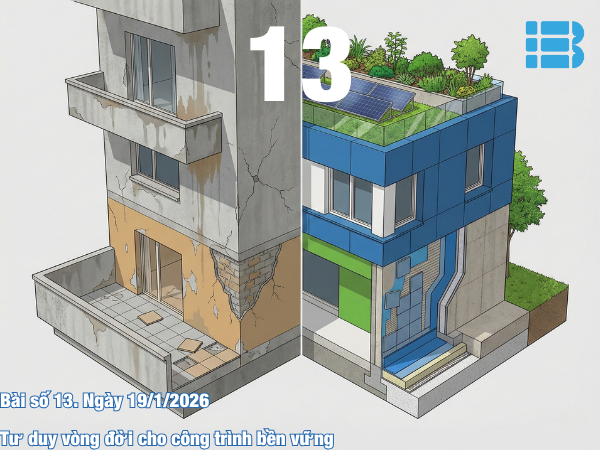
Misuse, overloading, and lack of care are common causes of cracking, debonding, leakage, and premature deterioration.
3. The gap between design assumptions and real use
Many buildings are designed based on idealized usage scenarios. When real behavior differs significantly, sustainability risks emerge.
4. Educating and guiding users
Sustainable construction includes educating users on proper building use, basic maintenance, and respecting design limits.
5. Designing for real-world behavior
Sustainable design must tolerate real-life usage patterns, including variability and imperfect behavior, rather than relying on ideal conditions.
6. User behavior and Life Cycle Cost (LCC)
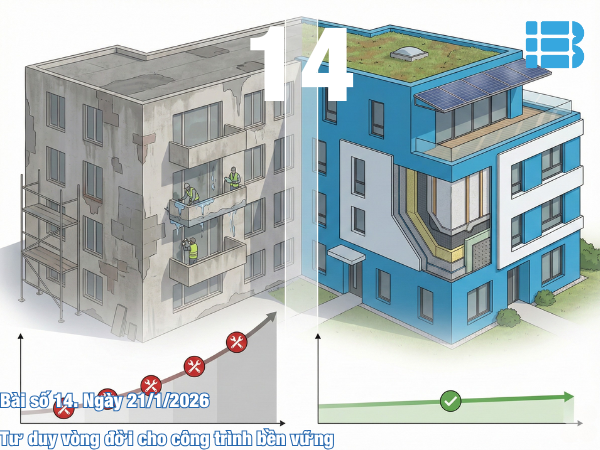
Improper use increases repair frequency, shortens service life, and raises lifecycle costs—even if initial investment was low.
7. Stakeholder responsibility in managing behavior
Owners, operators, and designers share responsibility in anticipating, guiding, and managing user behavior to protect sustainability outcomes.
8. BUMATECH’s perspective
BUMATECH designs material solutions based on realistic usage conditions. Proper materials and application help buildings withstand real-world behavior.
9. Conclusion
Sustainable construction is as much about people as it is about technology. When user behavior is understood and managed, buildings can achieve lasting sustainability.