What is tile adhesive?
Tile adhesive is a factory-mixed bonding material based on cement, polymer or reactive resin, used to firmly fix tiles onto concrete, cement render, waterproofed substrates or properly prepared existing tile layers. Compared with traditional cement slurry, tile adhesive provides higher and more consistent bond strength, reducing debonding and hollow spots while extending the service life of the building.
How is tile adhesive classified under standards?
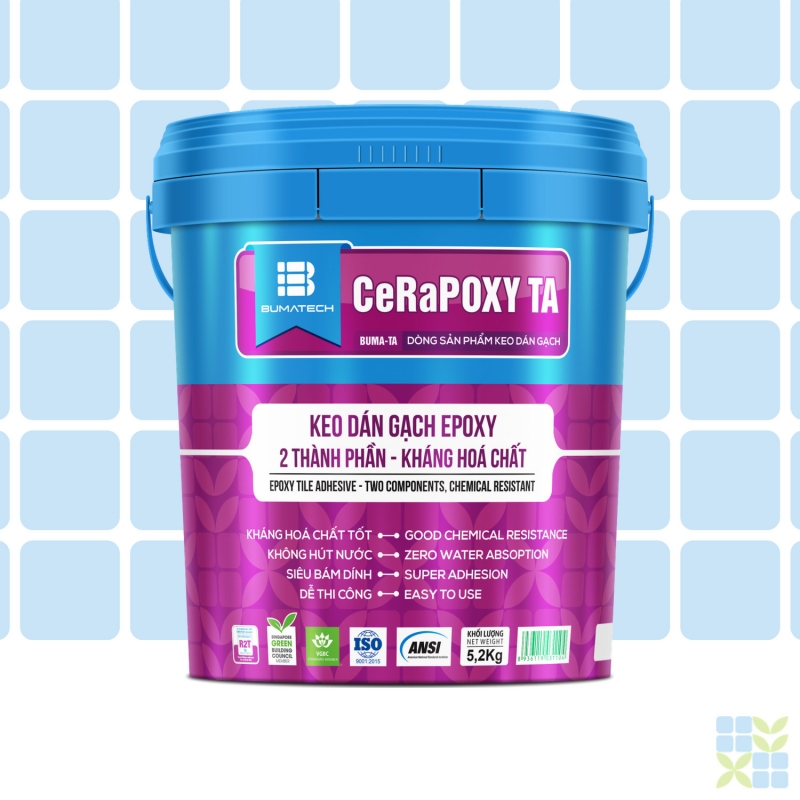
Under TCVN 7899 and ISO 13007, tile adhesives fall into 3 groups: C (cementitious, graded C1, C1T, C2, C2TE, C2TES1...), D (dispersion) and R (reaction resin such as epoxy). Higher grades deliver stronger bonding, better slip resistance and higher deformability. BUMATECH covers the full range from C1 to C2TES1, plus the R2T epoxy adhesive CeRaPOXY TA.
Which tile adhesive is the best?
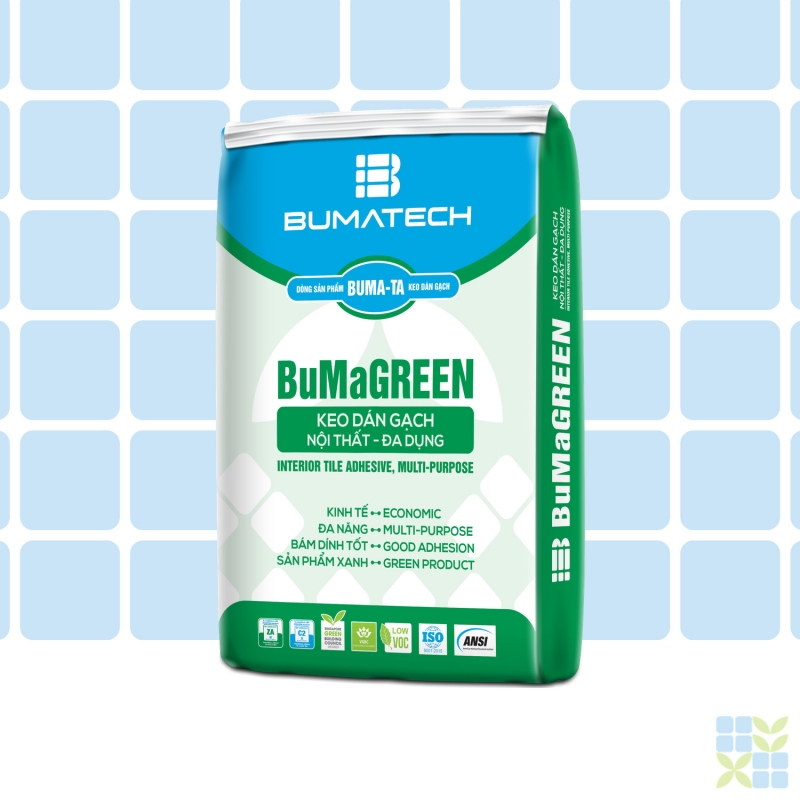
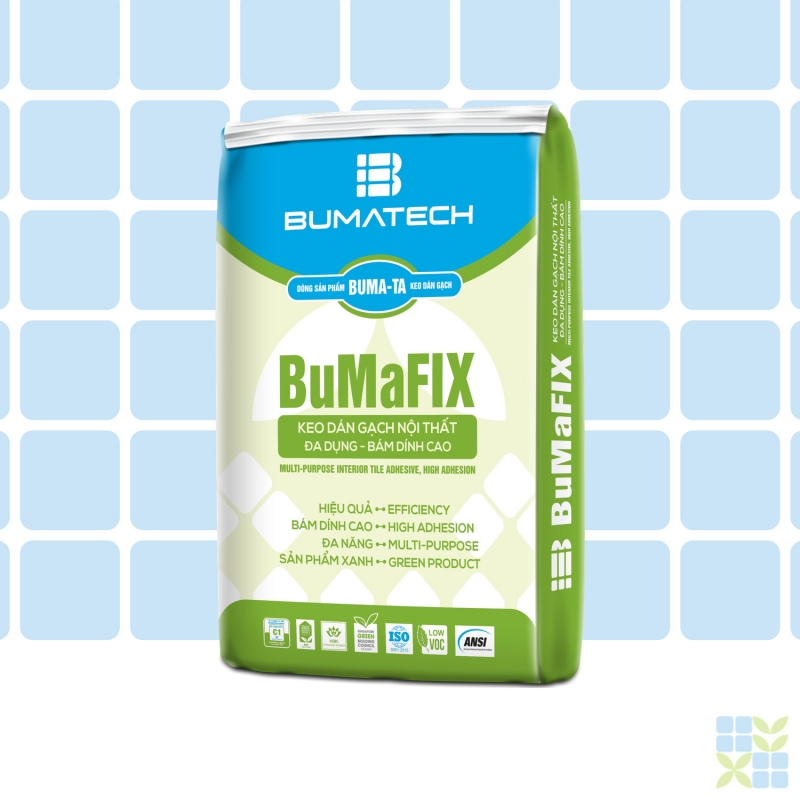
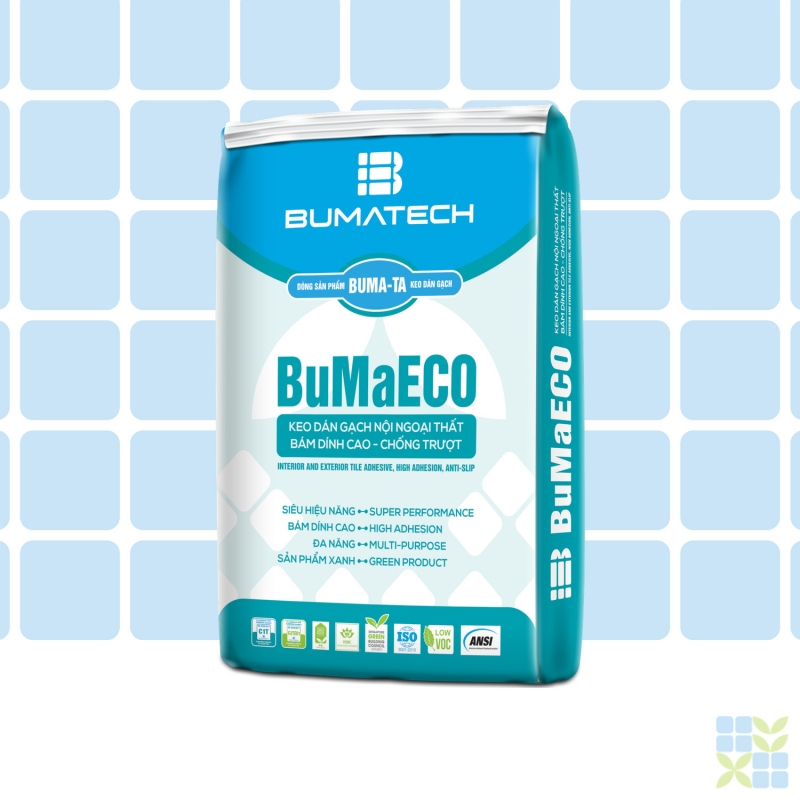
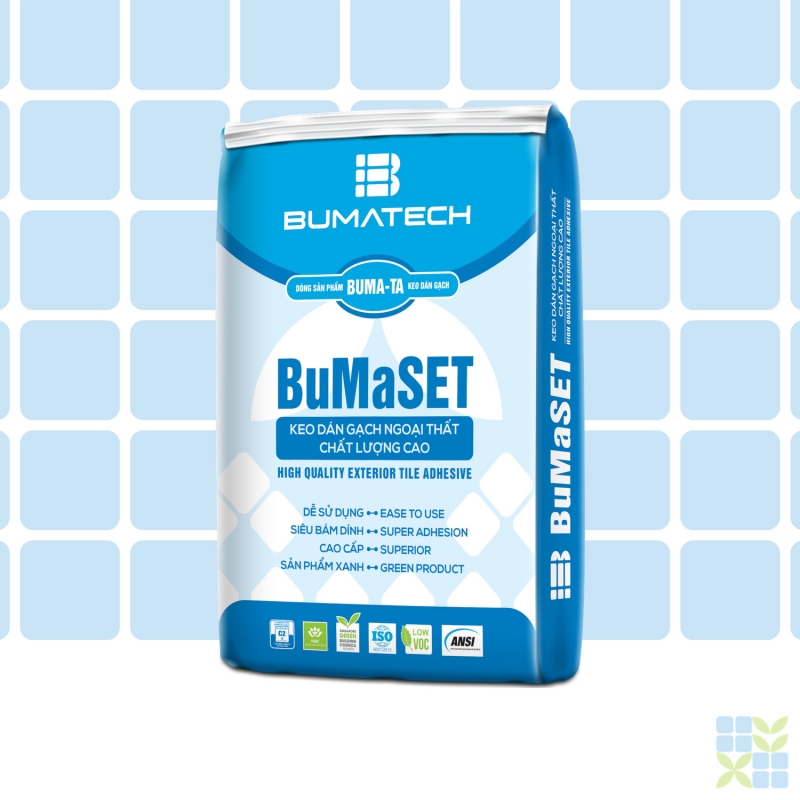
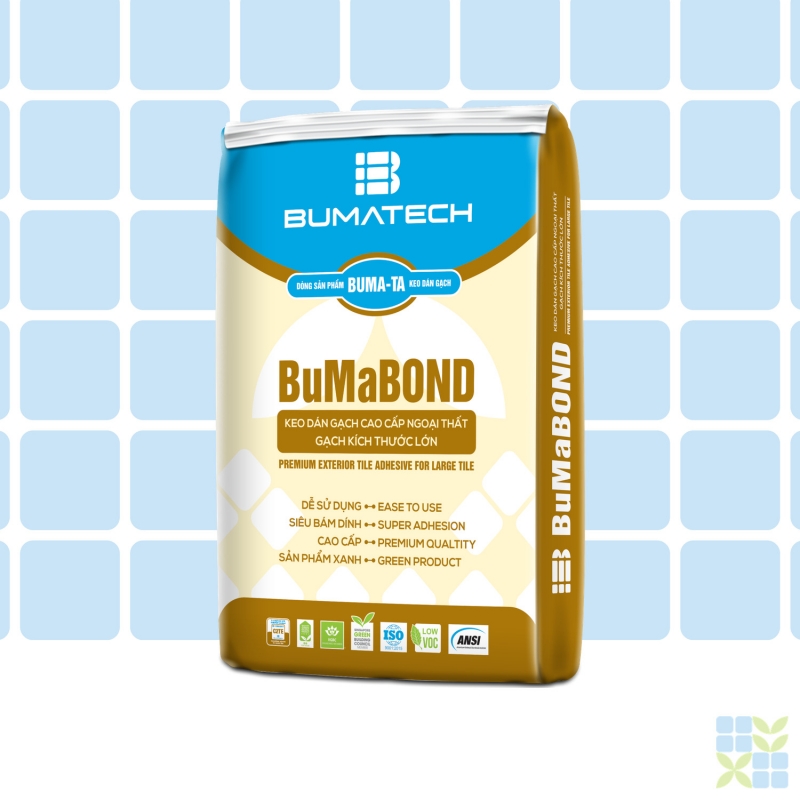
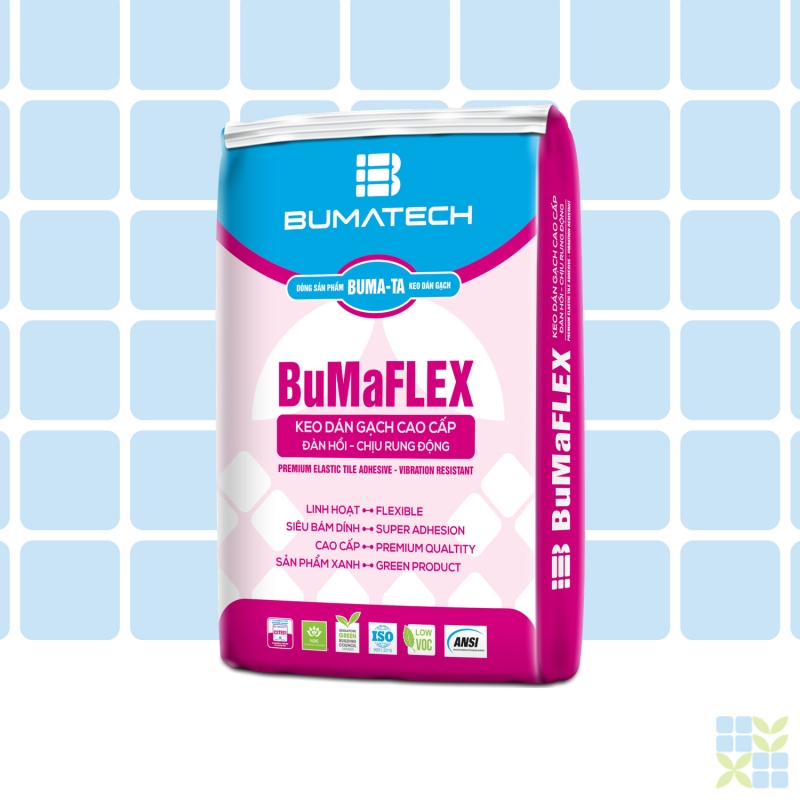
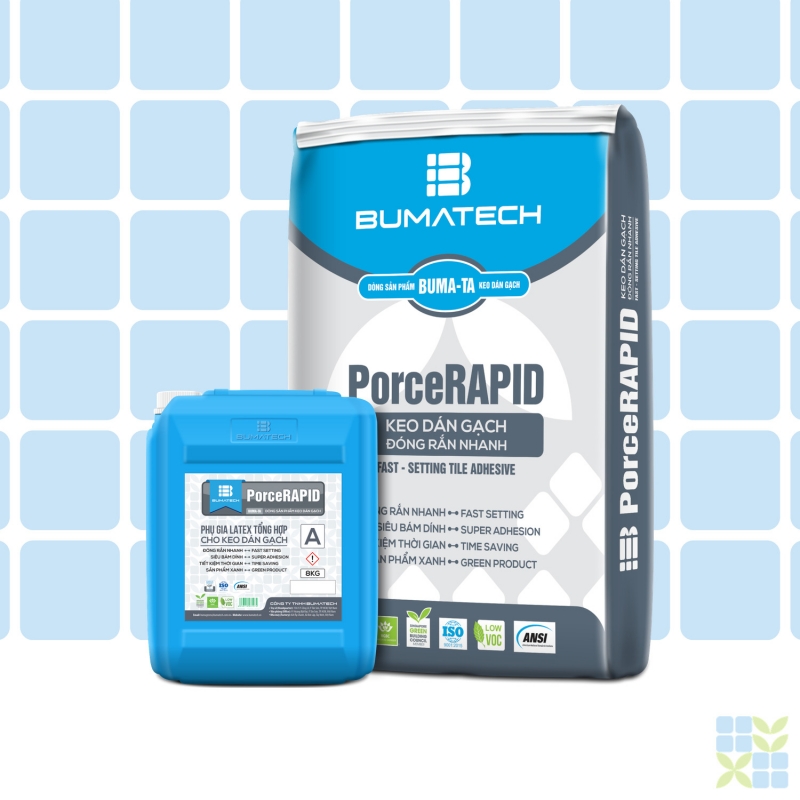
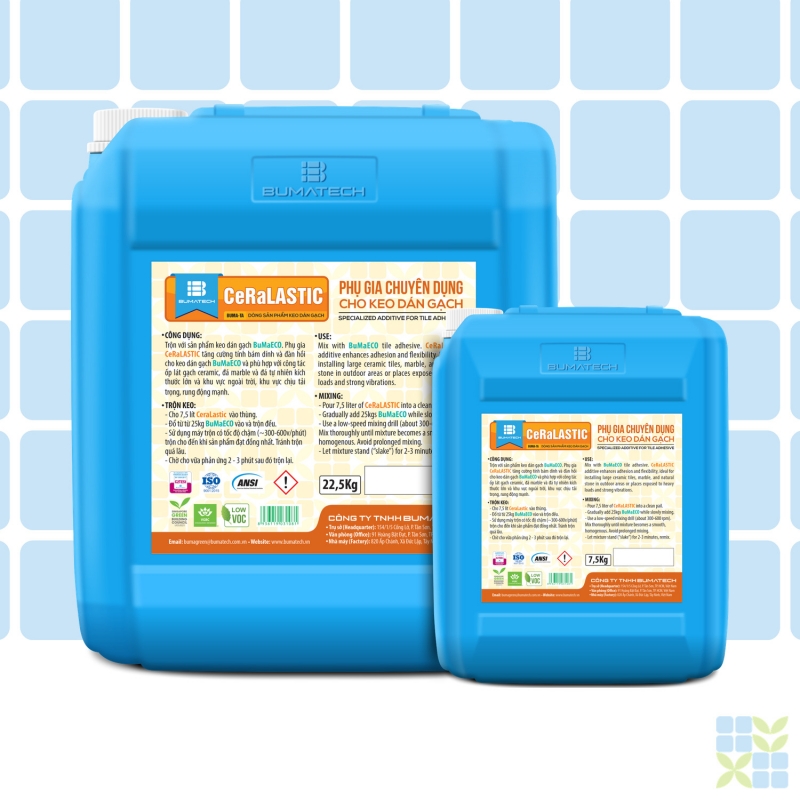
There is no single "best" adhesive — the right product is the one matched to the service conditions. For dry interiors use BuMaGREEN or BuMaFIX; for interior/exterior with slip resistance use BuMaECO; for facades and large-format tiles use BuMaSET or BuMaBOND; for pools and vibration-prone areas use BuMaFLEX (C2TES1); for fast-track handover use rapid-setting PorceRAPID.
Should I use tile adhesive or traditional cement slurry?
Tile adhesive is the recommended choice. It delivers higher, more uniform bond strength, is applied as a thin bed that saves material, and minimises voids behind the tile — the main cause of debonding, water ingress and grout cracking. With today's low-absorption porcelain and large-format tiles, traditional cement slurry can barely achieve the required adhesion.
How many square metres does a 25kg bag of tile adhesive cover?
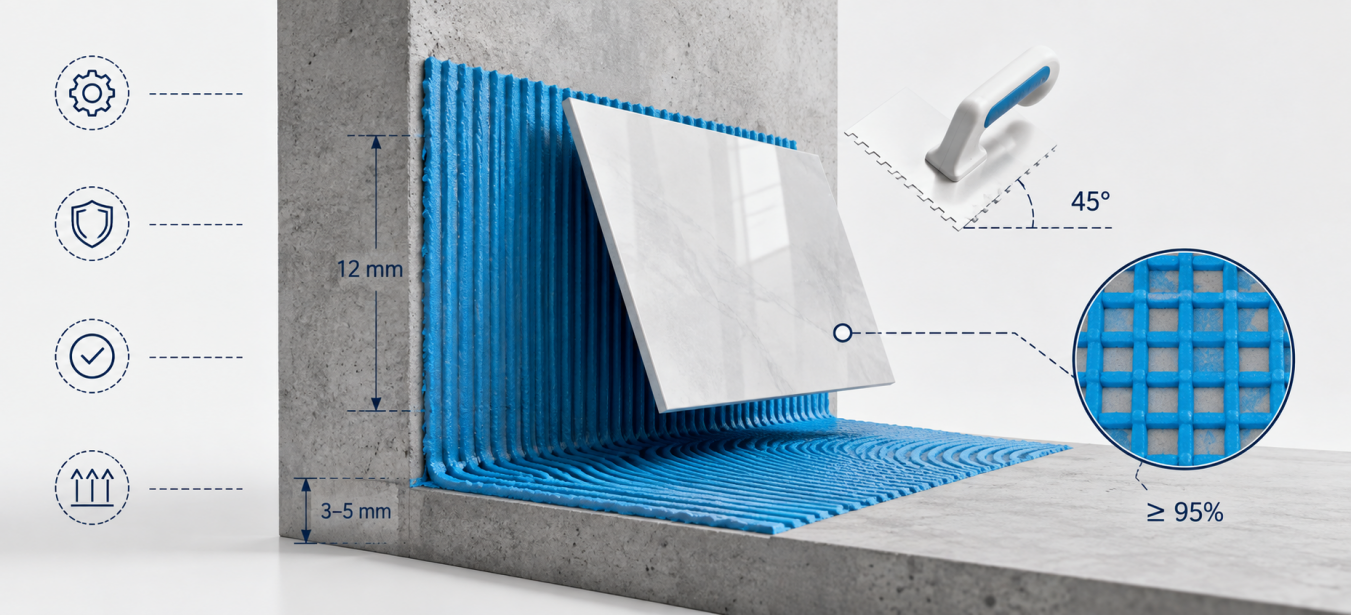
Coverage depends on tile size, substrate flatness and trowel notch size: small tiles under 30x30cm (6mm notch) achieve about 5–7 m² per bag; tiles 60x60cm and larger (10–12mm notch with back-buttering) about 3–4 m² per bag. See the Technical Data Sheet (TDS) of each product on the BUMATECH website for exact consumption figures.
Which adhesive should be used for large-format tiles (60x60, 60x120, 100x100)?
Large-format tiles are heavy with very low absorption, so a C2-grade adhesive or higher is mandatory — preferably slip-resistant (T) and deformable (S1) types such as BuMaBOND or BuMaFLEX. Apply adhesive on both the substrate and the tile back (back-buttering) and use a levelling wedge-and-strap system to prevent lippage and hollow corners.
How to mix and apply tile adhesive correctly?
Mix the adhesive with clean water at the ratio stated on the bag using a slow-speed mixer until homogeneous, let it slake for 3–5 minutes, then remix before use. Spread with a notched trowel in one direction, lay tiles within the open time (typically 15–20 minutes), and use the mixed batch within its pot life — never re-temper stiffened adhesive with extra water.
Can new tiles be installed directly over existing tiles?
Yes, provided the existing tile layer is sound and firmly bonded. Degrease and clean the surface, roughen it or apply a bonding primer, then use a high-adhesion C2-grade adhesive such as BuMaSET or BuMaBOND. This tile-over-tile approach saves demolition cost and cuts construction waste — in line with sustainable renovation practice.
Which tile adhesive works for outdoor areas and swimming pools?
Outdoor areas face sun, rain and high thermal movement, so use slip-resistant C2 adhesives such as BuMaSET or BuMaBOND; for pools and permanently immersed areas use the deformable C2TES1 adhesive BuMaFLEX over a suitable waterproofing layer, finished with water-resistant grout. For chemical-exposure zones (chemical tanks, food plants) use CeRaPOXY TA epoxy adhesive.