Nhập địa chỉ email của bạn dưới đây và chúng tôi sẽ gửi cho bạn một mật khẩu mới.
1. What is Life Cycle Cost (LCC)?
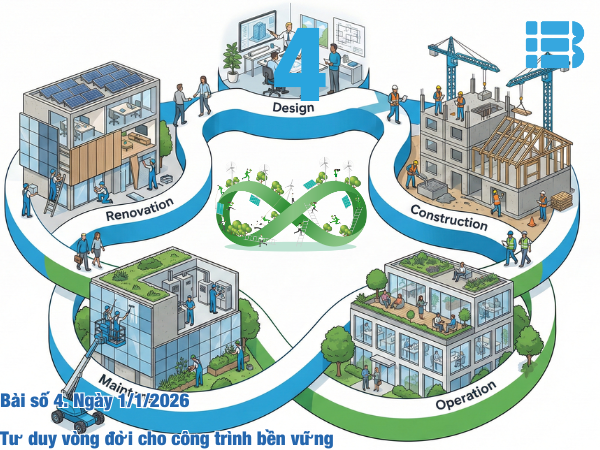
Life Cycle Cost refers to the total cost incurred over a building’s entire lifespan, including initial investment, operation, maintenance, repairs, renovations, and indirect costs caused by downtime or disruption.
2. Why initial cost alone is misleading
Many construction decisions focus on minimizing upfront costs. However, short-term savings often lead to higher maintenance and repair expenses, significantly increasing total lifecycle cost.
3. The misconception of “cheap repairs”
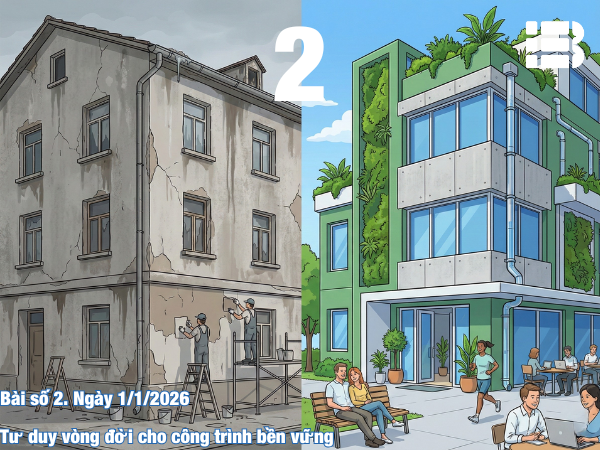
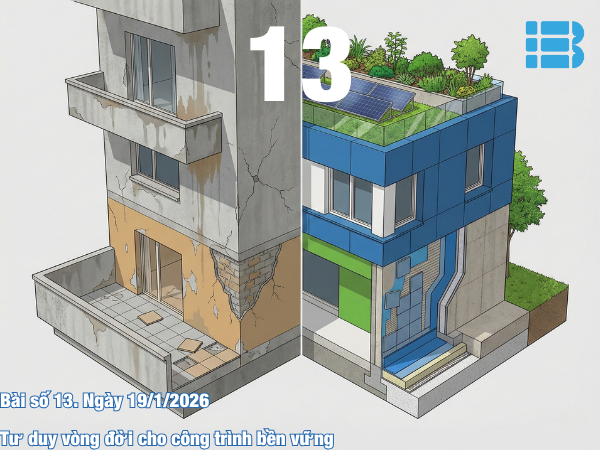
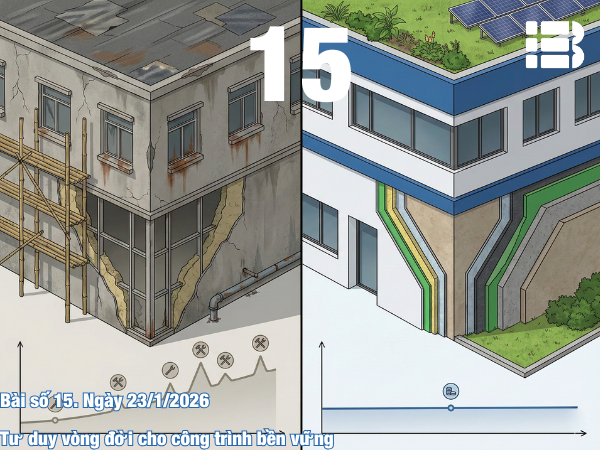
A common belief is that fixing issues as they arise is cheaper than investing properly upfront. In reality, repeated repairs result in:
(1) Increasing material and labor costs
(2) Rework and demolition waste
(3) Operational disruption
(4) Progressive performance degradation
4. The link between durability and lifecycle cost
Higher durability reduces repair frequency and extends effective service life. When durability is prioritized, overall lifecycle cost is often lower, even if initial investment is slightly higher.
5. Role of materials and construction in optimizing LCC
Appropriate material selection and correct construction practices from the beginning are critical to controlling lifecycle cost—especially for finishing and waterproofing works.
6. Hidden costs of frequent repairs
Beyond direct expenses, repairs introduce hidden costs such as:
(1) Loss of usability or business interruption
(2) Asset value depreciation
(3) Safety and reputational risks
These costs are often underestimated in early decision-making.
7. Life Cycle Cost in sustainable construction
Sustainable construction is not only an environmental concept but also a long-term economic strategy. LCC helps stakeholders evaluate value over time rather than short-term savings.
8. BUMATECH’s perspective
BUMATECH designs material solutions and construction guidance with lifecycle cost optimization in mind—reducing repairs, minimizing waste, and delivering durable long-term value.
9. Conclusion
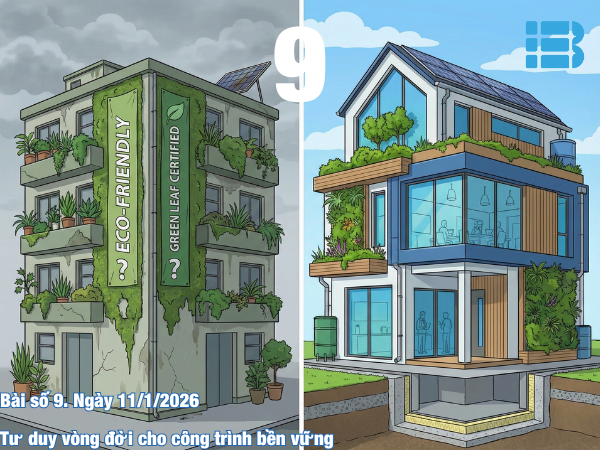
Frequent repairs are not a cost-saving strategy but a symptom of short-term thinking. Lifecycle cost analysis enables durable, economical, and sustainable building outcomes.