What is tile grout?
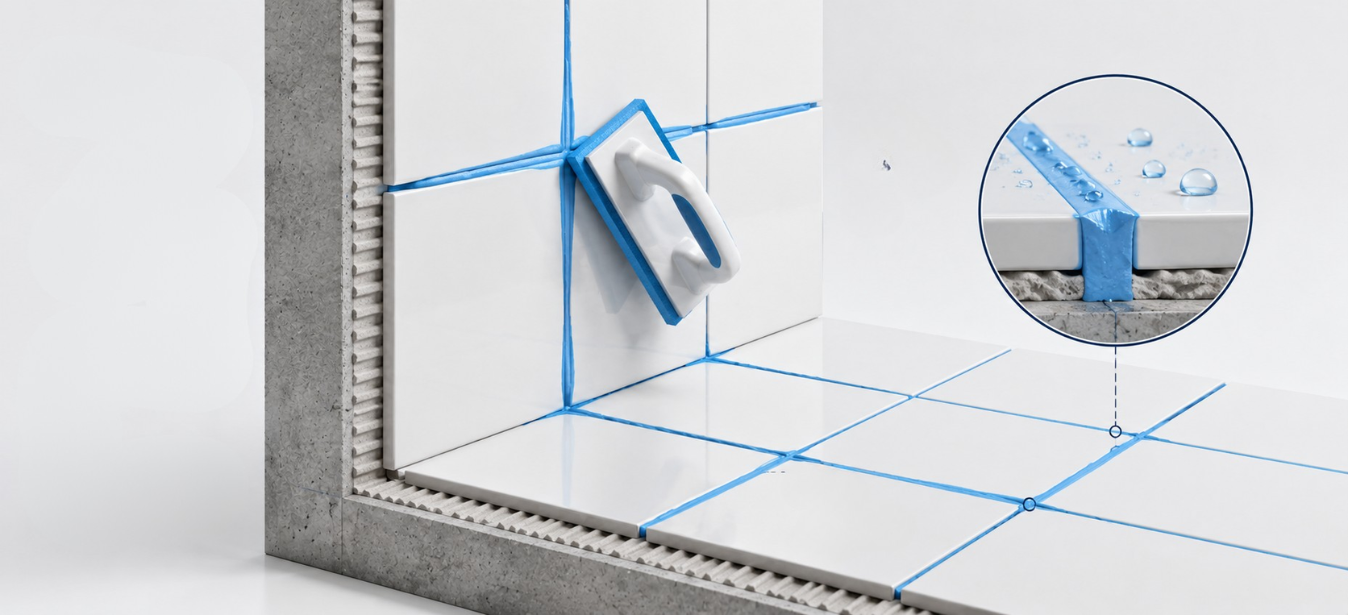
Tile grout is the material that fills the joints between tiles after installation, completing the finished look and protecting joints from water penetration, cracking, staining and mould. Durable grout keeps water out of the adhesive bed and substrate below, extending the life of the whole tiling system.
What types of tile grout are there?
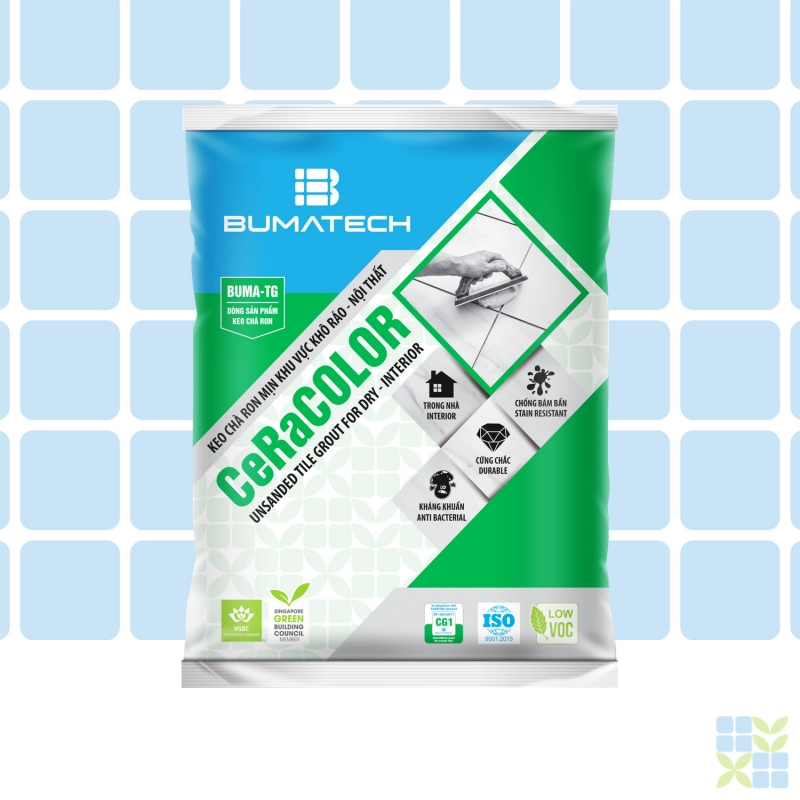
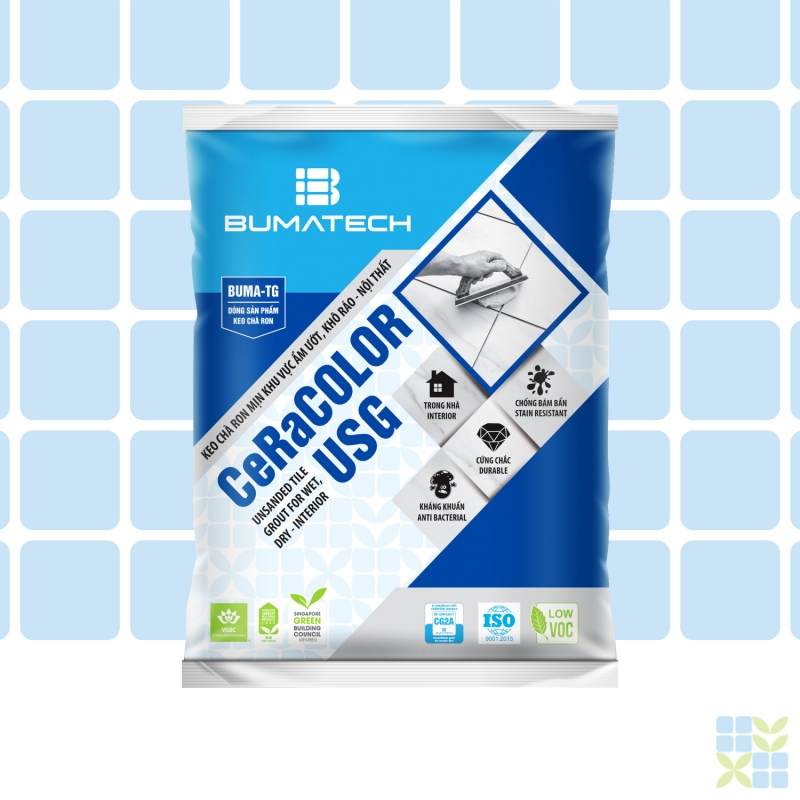
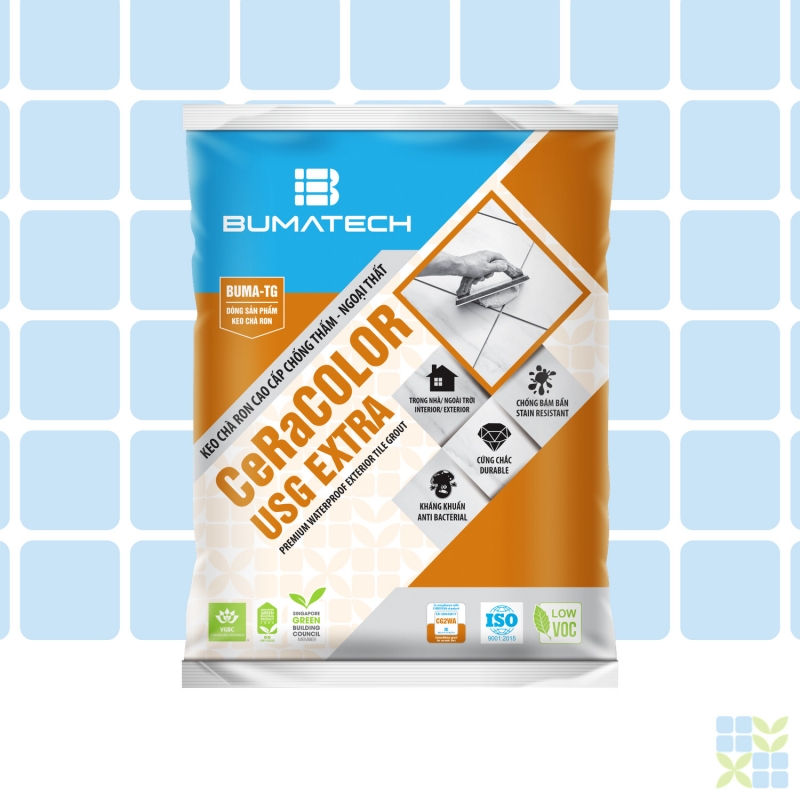
Under TCVN 7899 and ISO 13007, grouts fall into 2 groups: CG (cementitious — graded CG1, CG2A high-abrasion-resistance, CG2WA high abrasion resistance with reduced water absorption) and RG (reaction resin such as epoxy). BUMATECH offers CeRaCOLOR for dry areas, CeRaCOLOR USG for wet areas, USG EXTRA waterproof grout for exteriors, and epoxy-based CeRaPOXY TG for chemical resistance.
Which grout should be used for bathrooms and toilets?
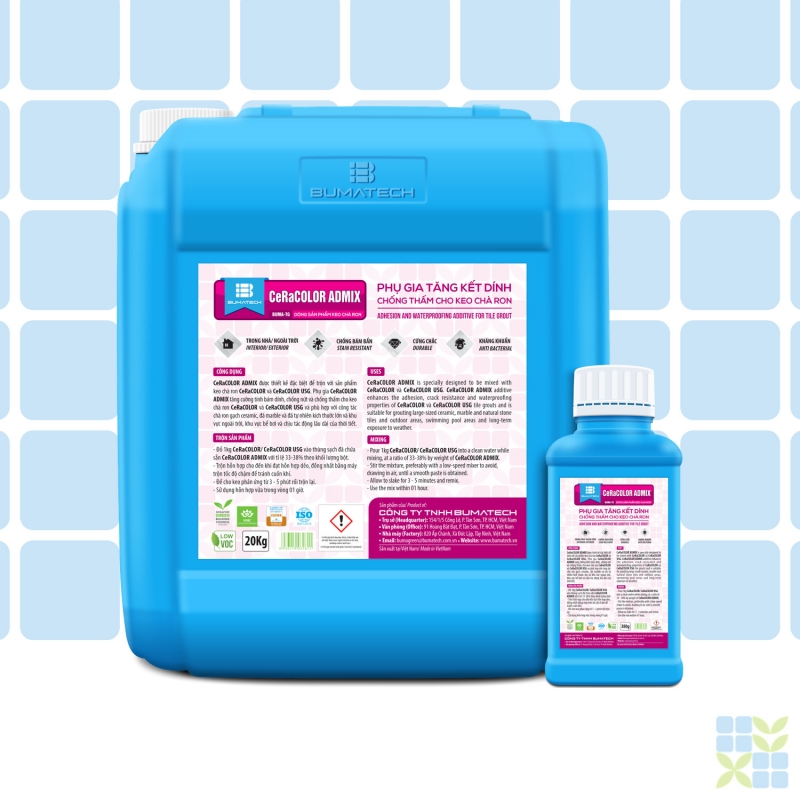
For frequently wet areas, use a CG2WA-grade grout with reduced water absorption such as CeRaCOLOR USG, or add CeRaCOLOR ADMIX latex additive to boost adhesion and water resistance. Where waterproofing and stain resistance demands are highest (spas, pools, commercial kitchens), use CeRaPOXY TG epoxy grout — virtually non-absorbent and easy to clean.
How does epoxy grout differ from cementitious grout?
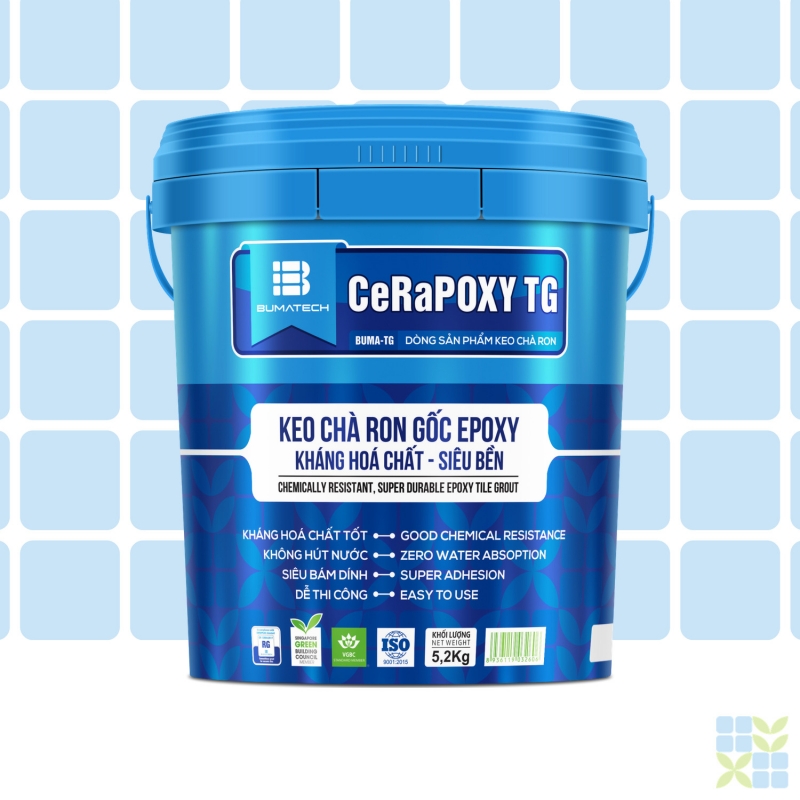
Epoxy grout (CeRaPOXY TG) is a two-part system of epoxy resin and hardener: virtually waterproof, chemical-resistant, stain-proof, mould-free and extremely durable — ideal for kitchens, pools, hospitals and food plants. The trade-offs are higher cost and the need for skilled application and correctly timed clean-up. Cementitious grout is easier to apply, economical, and fully adequate for most residential areas.
How long after tiling can grouting start?
Normally wait at least 24 hours for the tile adhesive to set and residual moisture to escape, preventing colour mottling or grout debonding from early movement. With rapid-setting adhesives such as PorceRAPID, grouting can start after 3–4 hours. Clean the joints thoroughly and remove tile spacers before grouting.
What is the standard tile joint width?
Rectified porcelain tiles typically use 1.5–3mm joints; standard ceramic 3–5mm; exterior and landscape tiling 5–10mm to absorb thermal movement. Use BUMATECH cross spacers (1–10mm) for perfectly even joints. Never butt tiles tightly together: joints are needed to accommodate expansion, otherwise tiles may crack or tent when temperatures change.
Grout turning black with mould or yellowing — causes and remedies?
The root cause is standard cementitious grout absorbing water; prolonged damp breeds mould, made worse by wrong mixing ratios or improper cleaning. The lasting fix is to rake out the old grout, clean and dry the joints, then re-grout with water-resistant CeRaCOLOR USG (optionally with ADMIX) or CeRaPOXY TG epoxy grout for heavily wet areas.
Is tile grout waterproof?
High-quality grout greatly reduces water passing through tile joints — especially CG2WA and epoxy grades — but grout alone is not a substitute for a waterproofing layer. The correct principle: the waterproofing membrane sits beneath the tile adhesive, with grout as an additional protective layer on top. BUMATECH provides the complete matched system of waterproofing + adhesive + grout.
How to choose the right grout colour for tiles?
Match the grout to the tile colour (tone-on-tone) for a seamless, premium look, or pick a contrasting colour to emphasise the tile pattern — a popular choice with metro tiles. Avoid very light colours in stain-prone areas and kitchen floors; the CeRaCOLOR range offers a wide palette with long-term colour stability thanks to its colour-lock technology.