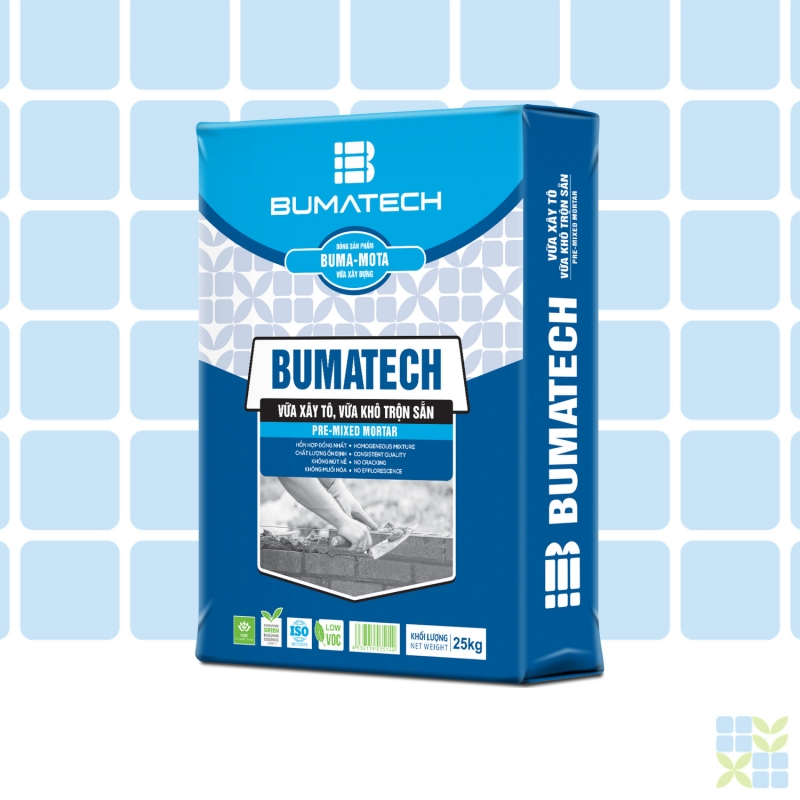
What is dry-mix mortar?
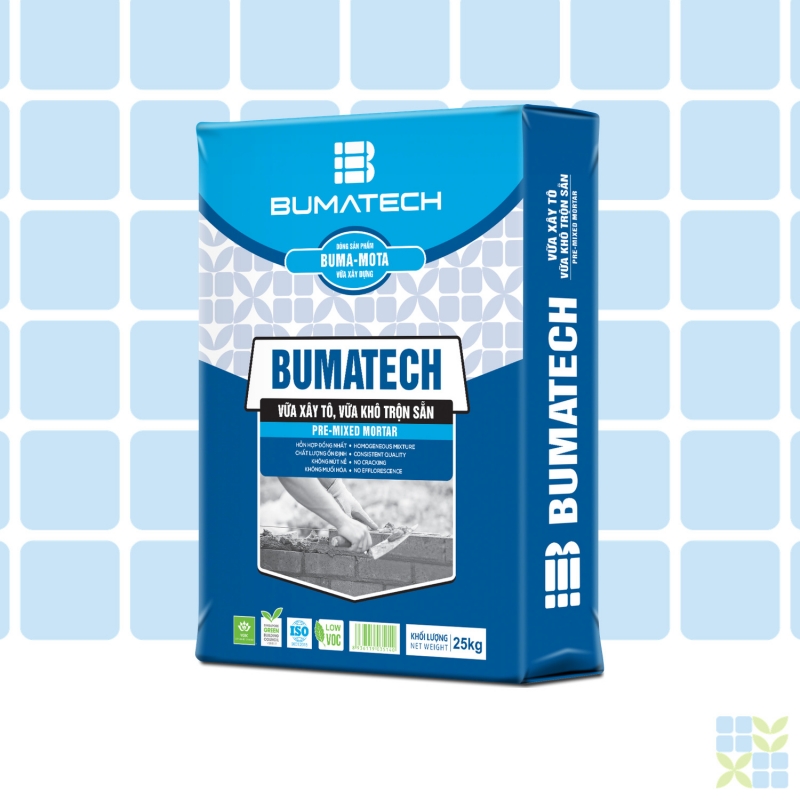
Dry-mix mortar is a factory-blended mixture of cement, selected kiln-dried sand and additives produced under controlled mix designs — just add water on site. Compared with hand-mixing on site, factory dry-mix delivers consistent quality at the specified grade, reduces dependence on worker skill, and keeps the site cleaner and tidier.
What do mortar grades 7.5MPa, 10MPa and 15MPa mean and how to choose?
The mortar grade is its compressive strength at 28 days. Ordinary residential masonry and rendering uses Re 75 (7.5MPa) or Re 100 (10MPa); higher-demand items such as load-bearing walls or damp zones use Sc 100 or Sc 150 (15MPa). Following the designed grade avoids both material waste and structural risk.
What are the advantages of dry-mix over site-mixed mortar?
Factory-controlled mix designs give a consistent grade in every bag rather than depending on a worker's judgement; clean kiln-dried sand free of impurities reduces cracking and improves bond; work goes faster with better quantity and wastage control; and no sand stockpile is needed on site — ideal for tight urban builds and high-rise projects using mortar pumps.
How many square metres does one bag of dry-mix mortar cover?
As a guide: 15mm-thick rendering consumes about 25kg/m², so one 50kg bag covers roughly 2m²; laying a 100mm hollow-brick wall takes about 15–20kg/m² depending on brick type and joint thickness. Check each Re/Sc product's TDS on the BUMATECH website for exact consumption when estimating materials.
What mortar is required for AAC blocks and ALC panels?
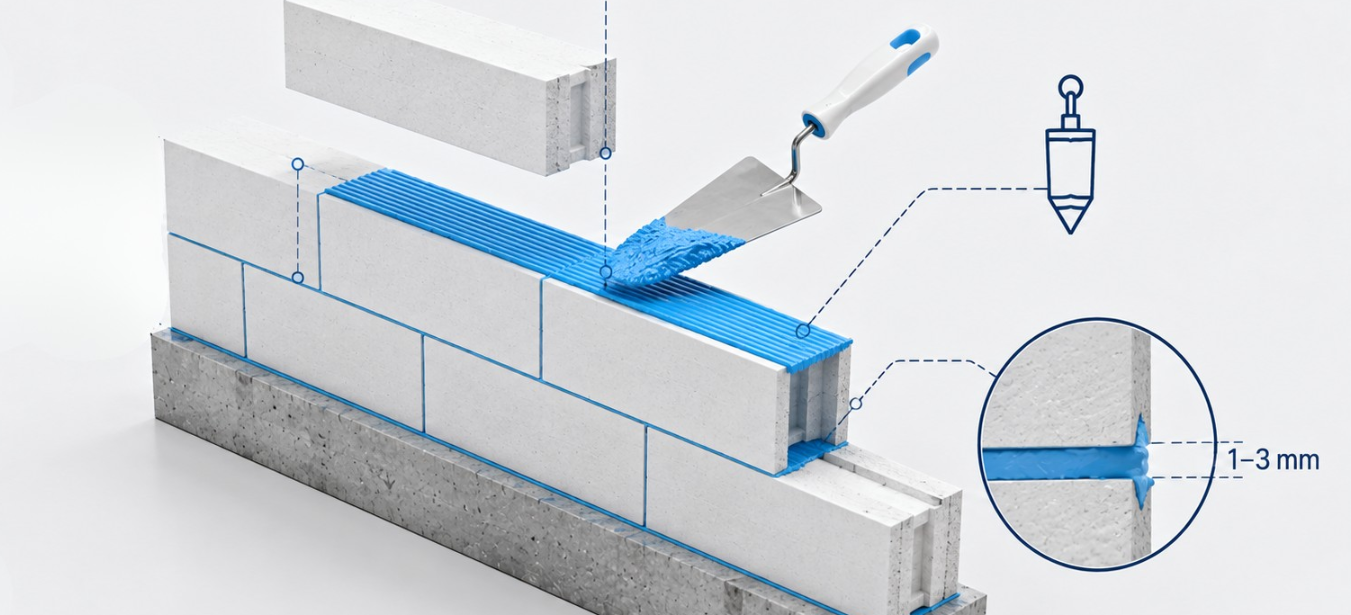
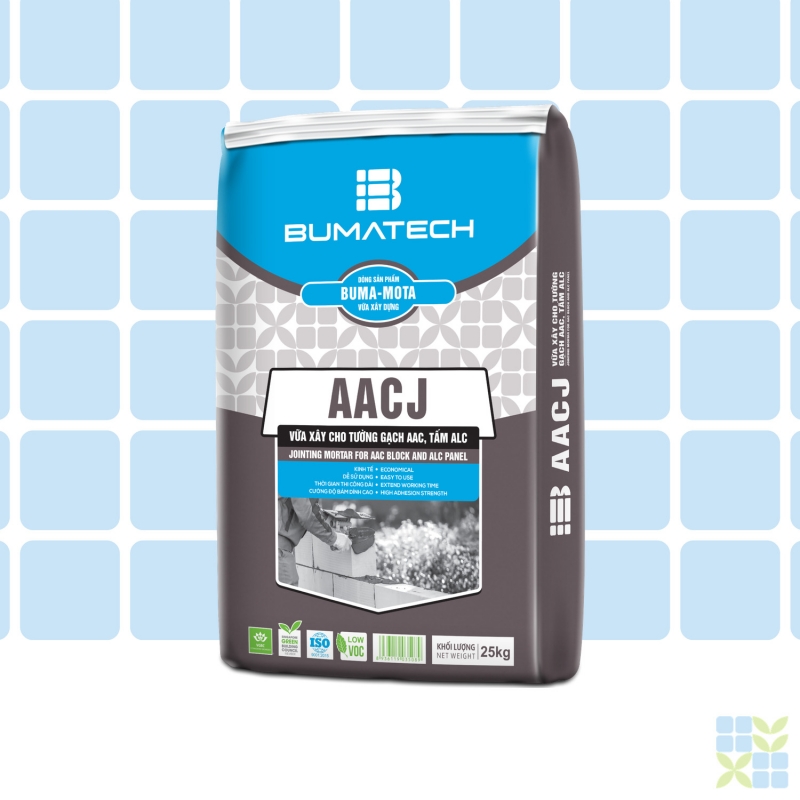
AAC blocks absorb water quickly and are dimensionally precise, so a dedicated thin-bed mortar such as AAC-J is required: applied in 2–3mm joints with a notched trowel, with high bond strength and water retention so the block cannot dry the mortar out before it cures. Ordinary thick-bed mortar causes joint cracking, reduces thermal performance and wastes material.
What is non-shrink grout and when is it used?
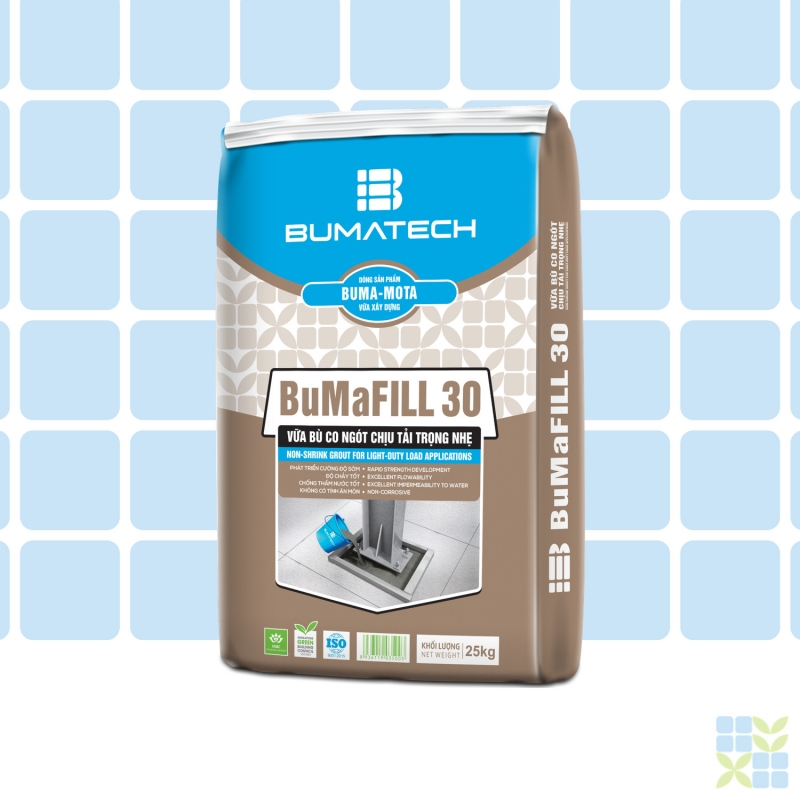
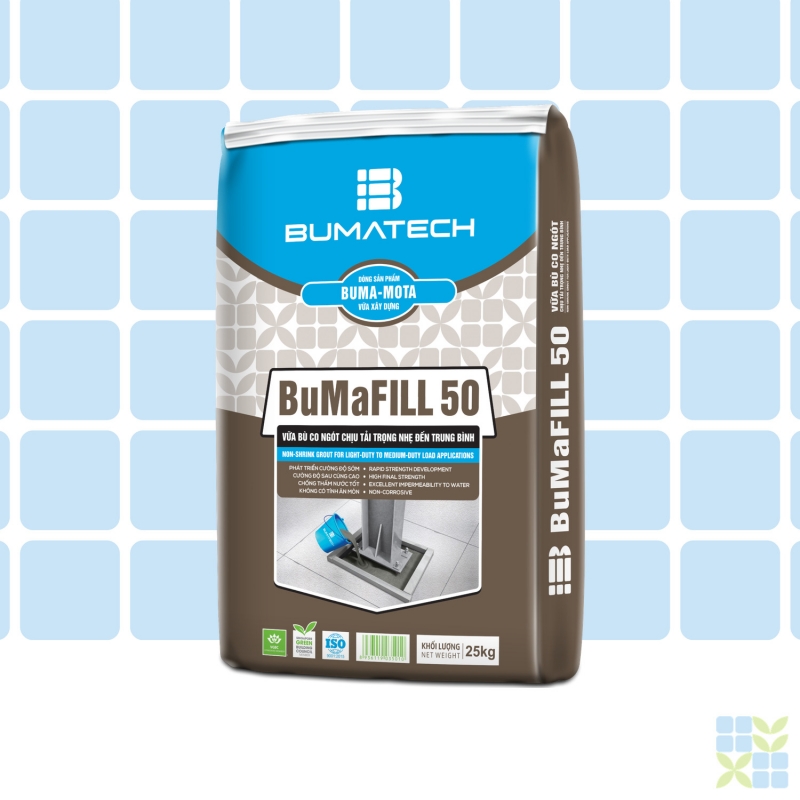
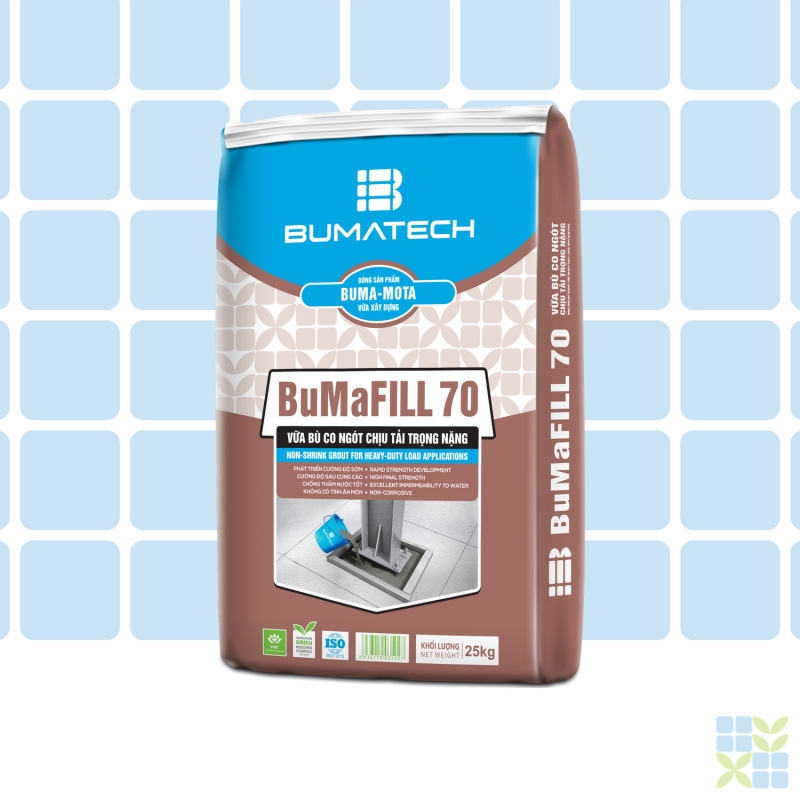
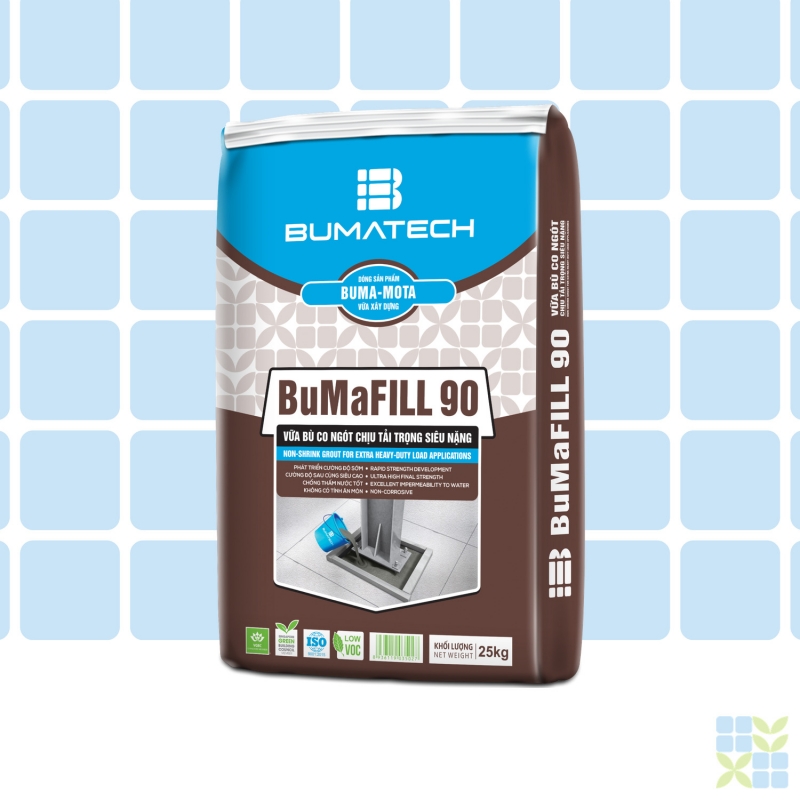
Non-shrink grout is a high-strength, flowable cementitious mortar that does not shrink as it cures, used for machine base plates, steel column bases, anchor bolts and structural void filling. BUMATECH's BuMaFILL range spans 30–90MPa grades for light through super-heavy loads, serving everything from standard workshops to large industrial equipment foundations.
How to repair honeycombed, cracked or spalled concrete?
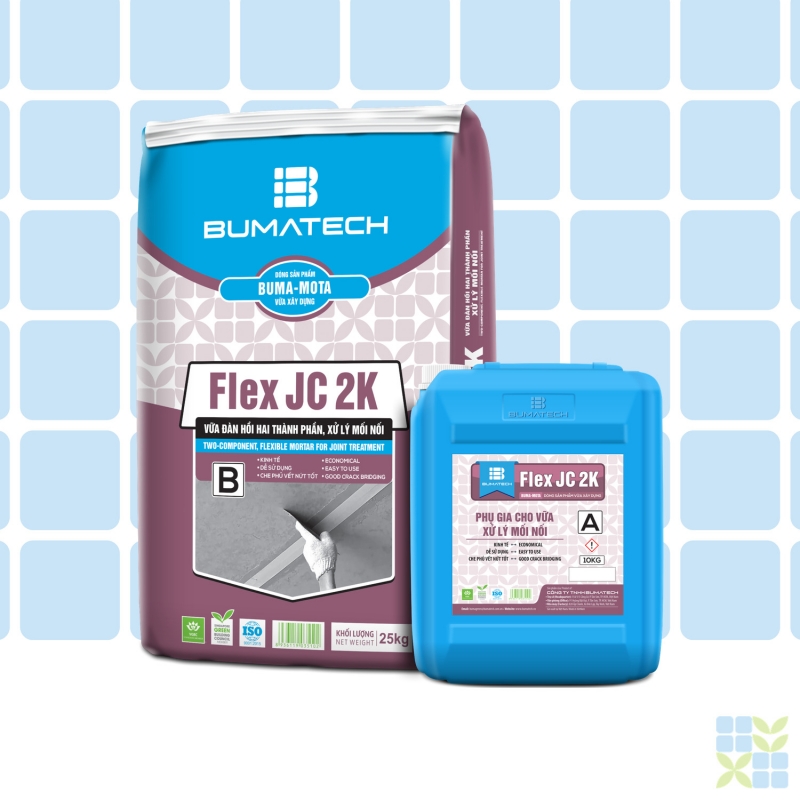
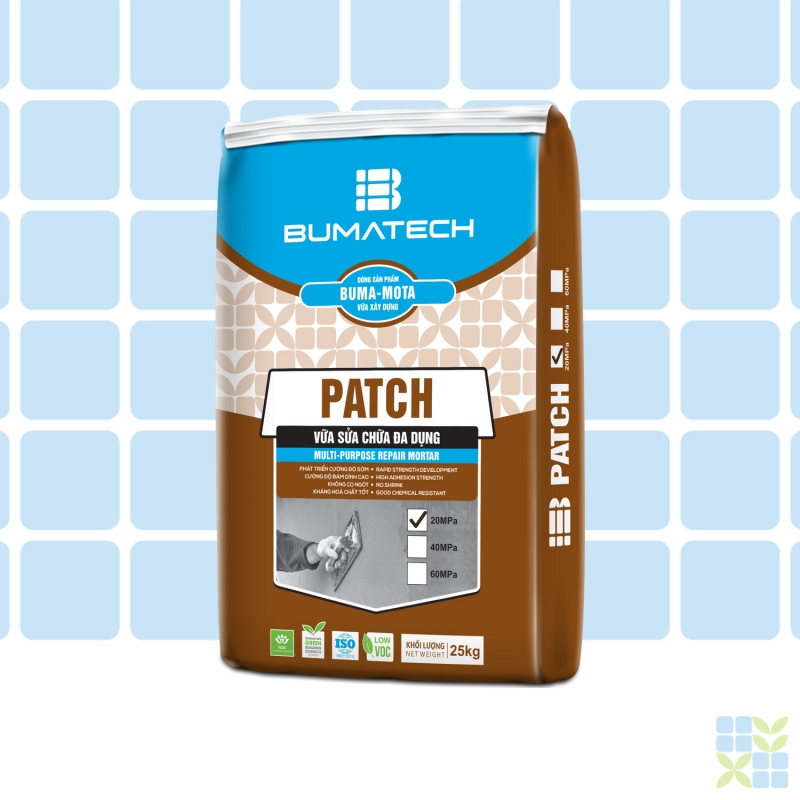
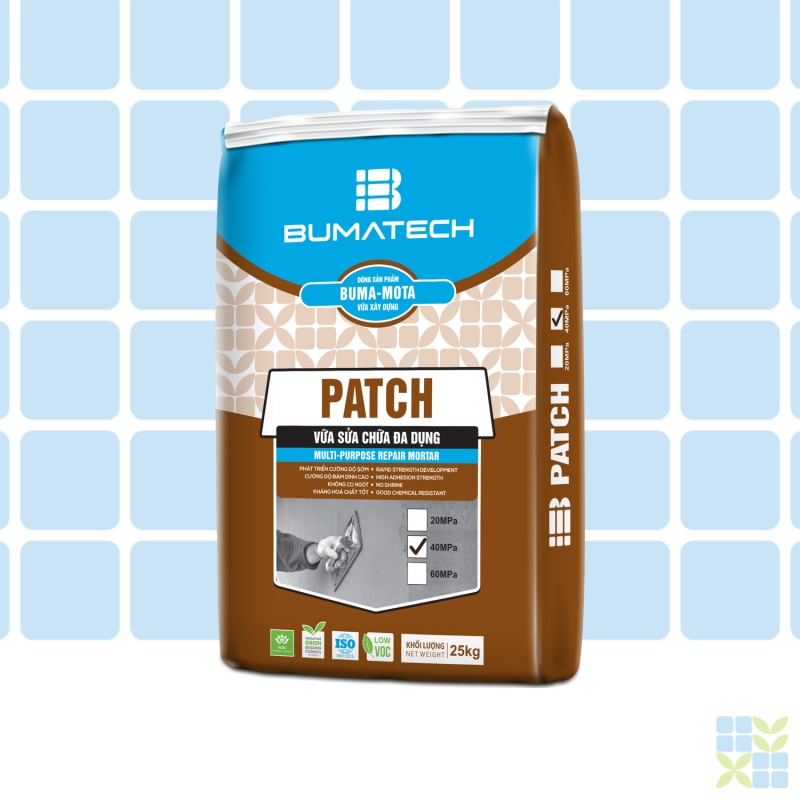
Use multipurpose repair mortars PATCH 20 or PATCH 40 (20/40MPa compressive strength) to fill honeycombs, repair spalled edges and reinstate concrete sections, combined with bonding agents PRIMER SP or LATEX SP to secure adhesion between new mortar and old concrete. Moving cracks and joints should be treated with the two-component flexible mortar Flex JC 2K.
Is there a water-resistant masonry and rendering mortar?
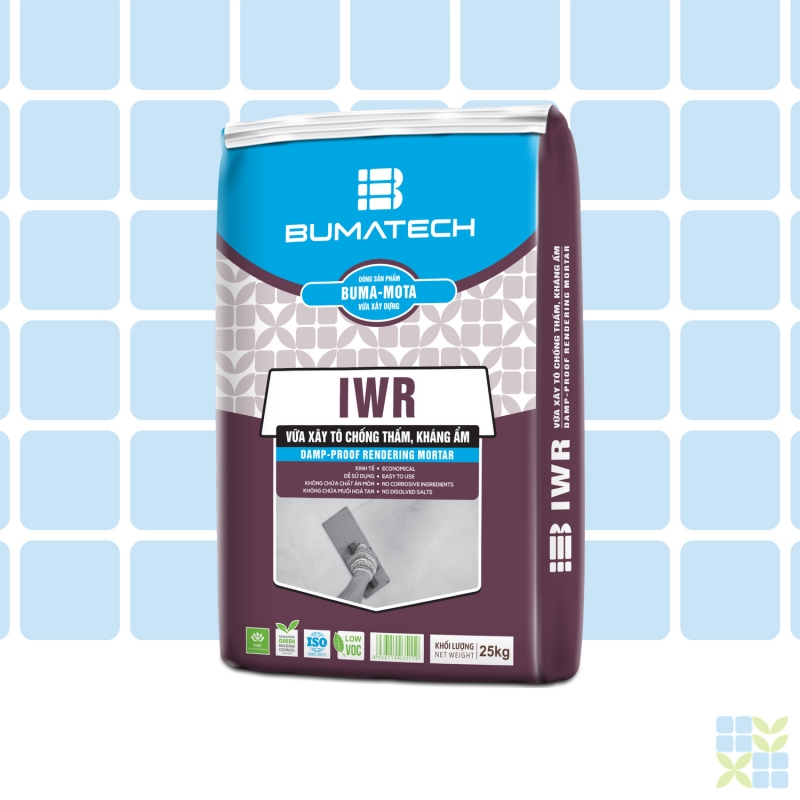
Yes — IWR is a masonry and rendering mortar with integral waterproofing and moisture-resisting additives, designed for walls in wet areas such as bathrooms, basements, wall bases and water tanks. Using IWR from the masonry stage creates a uniformly moisture-resistant wall mass, reducing damp patches and salt efflorescence at wall bases common in Vietnam's hot-humid climate.
How to correctly mix and cure masonry mortar?
Mix one 50kg bag with about 8–9 litres of clean water (per each product's instructions) using a mixer until uniformly plastic, and use within about 2 hours. After rendering, moist-cure the surface for 2–3 days (mist spraying, shading from sun and wind) so the mortar gains strength without map cracking — the most commonly skipped step, yet the one with the biggest impact on render quality.