Nhập địa chỉ email của bạn dưới đây và chúng tôi sẽ gửi cho bạn một mật khẩu mới.
1. What is the building lifecycle?
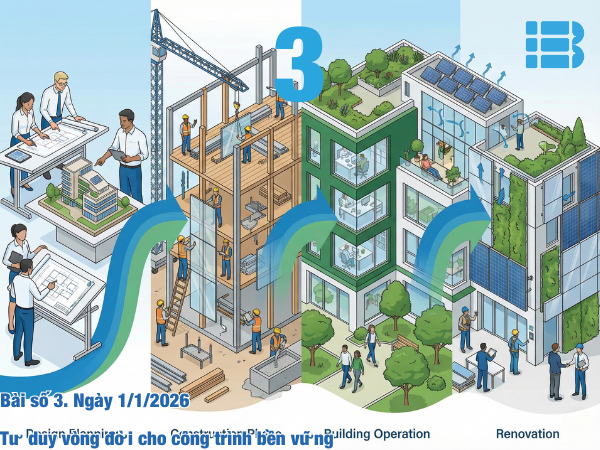
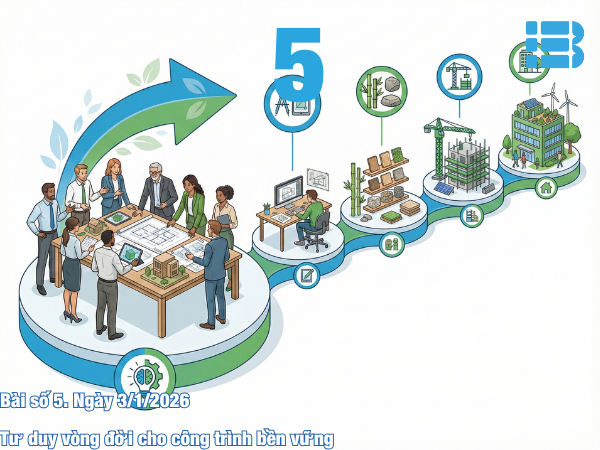
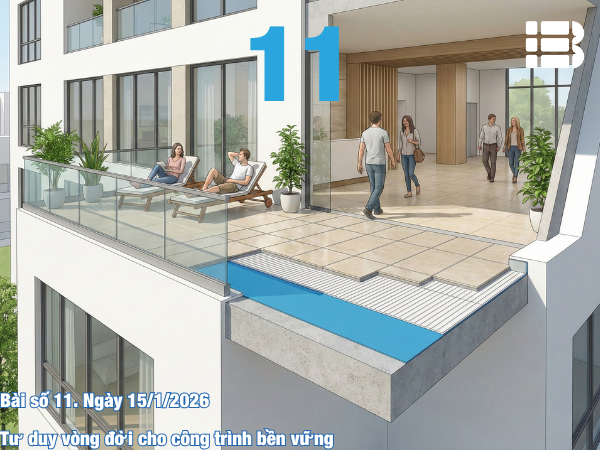
The building lifecycle refers to all stages a building goes through, from initial concept and design to construction, operation, maintenance, renovation, and eventual deconstruction or reuse. Each stage involves costs, resource use, and environmental impacts.
2. Why adopt a lifecycle-based approach?
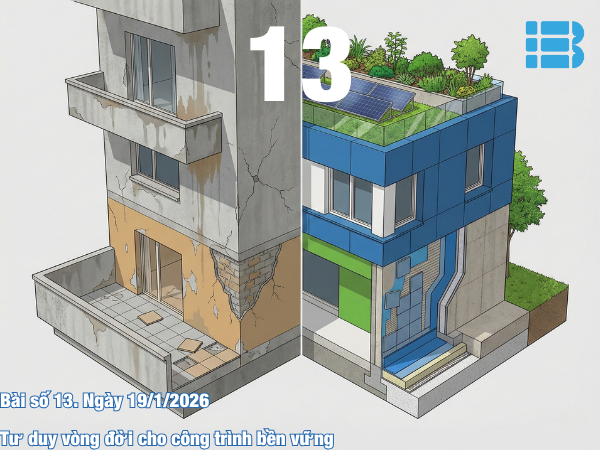
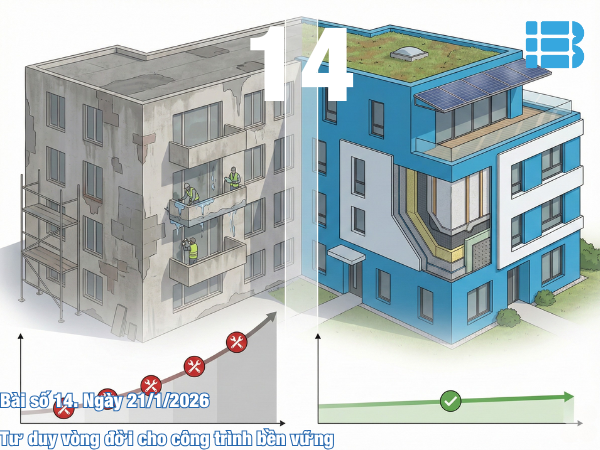
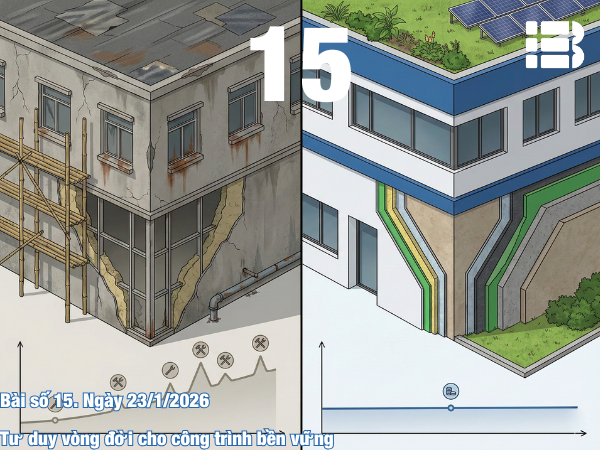
Focusing only on construction often leads to short-term decisions with long-term consequences, such as early deterioration and high maintenance costs. A lifecycle approach enables a comprehensive evaluation of a building’s long-term performance.
3. Key stages of the building lifecycle
- Design: Defining function, materials, and context-appropriate solutions.
- Construction: Proper execution to ensure durability and quality.
- Operation: Efficient use of energy, water, and resources.
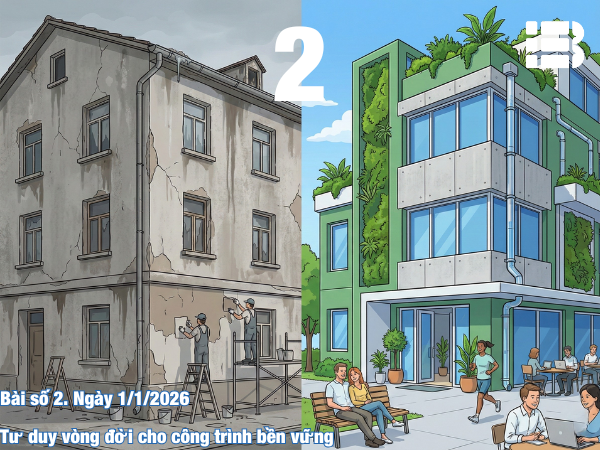
- Maintenance and renovation: Extending service life and reducing the need for demolition.
4. Sustainable thinking across lifecycle stages
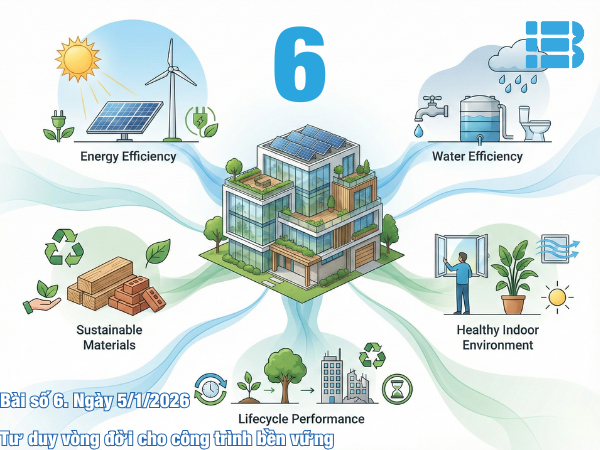
Sustainable thinking requires long-term considerations at every stage selecting suitable materials, applying correct construction methods, and prioritizing solutions that reduce repairs, emissions, and operational costs.
5. The relationship between lifecycle thinking and green building
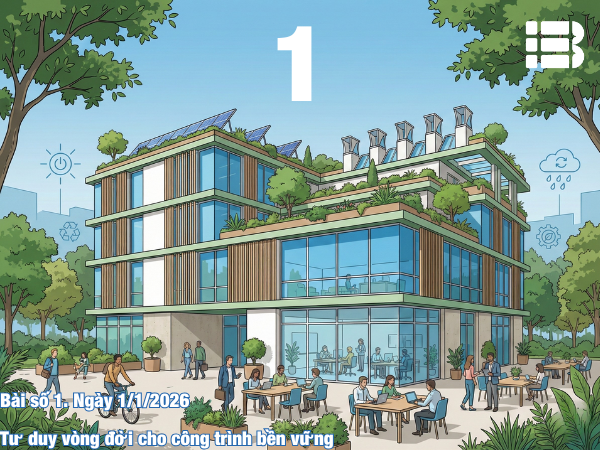
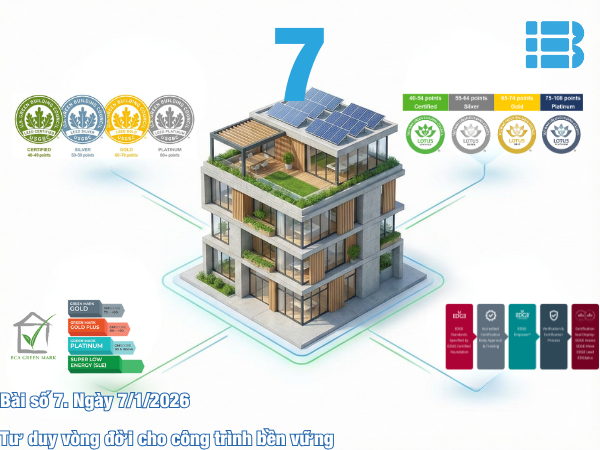
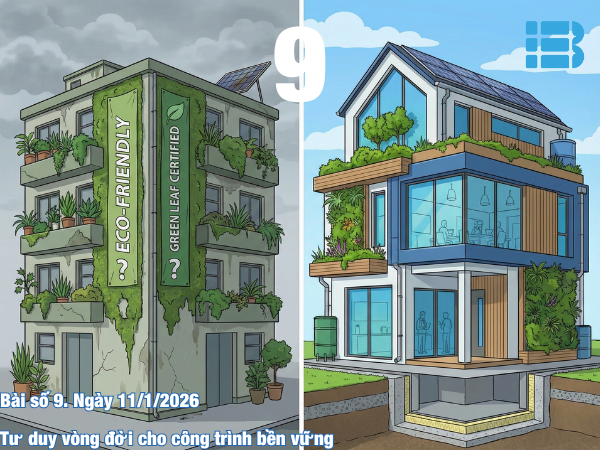
Green building cannot be separated from lifecycle thinking. A building is truly “green” only when decisions are optimized for its entire lifecycle, not just for appearance or isolated stages.
6. Relevance to Vietnam’s construction sector
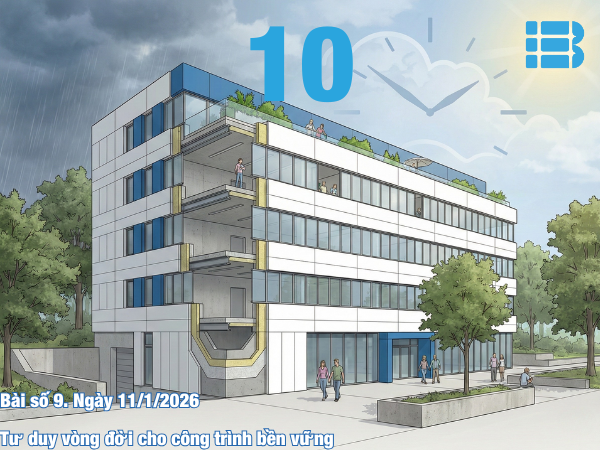
In Vietnam, frequent early repairs and renovations are common. Lifecycle-based thinking helps shift the industry from “building fast” to “building to last,” reducing resource waste and social costs.
7. BUMATECH’s perspective
BUMATECH approaches buildings as long-term systems, where materials, construction techniques, and application guidance are aligned to optimize building lifecycle performance and sustainability.
8. Conclusion
The building lifecycle provides a practical foundation for sustainable thinking. When every stage is addressed properly, buildings can achieve long-term quality, economic efficiency, and environmental responsibility.