Nhập địa chỉ email của bạn dưới đây và chúng tôi sẽ gửi cho bạn một mật khẩu mới.
1. Why measurement is the foundation of sustainability
Sustainability cannot rely on statements or assumptions. Without measurement, “green” solutions risk becoming superficial.
2. Measurement versus formal inspection
Sustainability measurement focuses on real operational outcomes—durability, maintenance frequency, and lifecycle cost rather than paperwork alone.
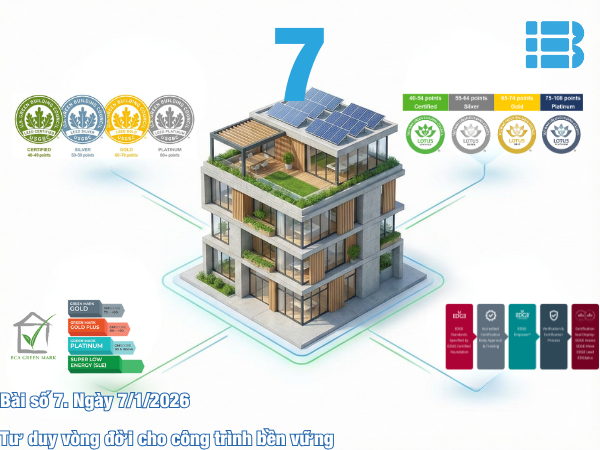
3. Common indicators in sustainable construction
Depending on project scope, indicators may include:
- Durability and service life
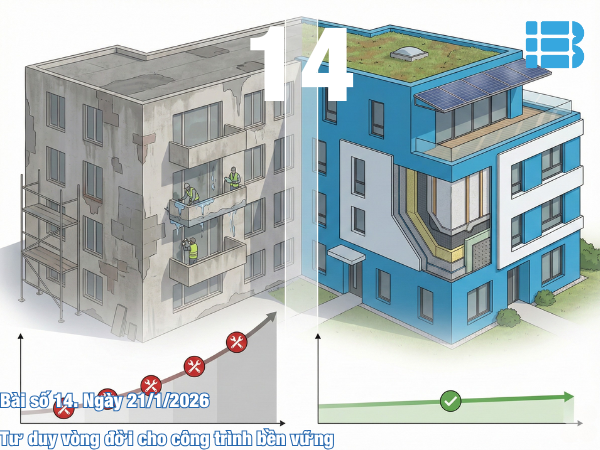
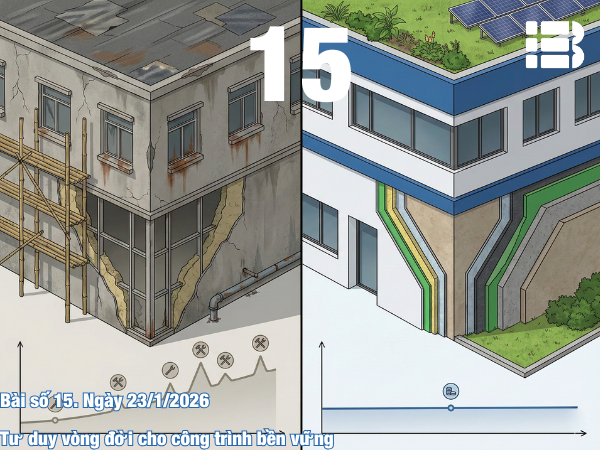
- Life Cycle Cost (LCC)
- Maintenance and repair frequency
- Resource and energy use
4. Early problem detection through measurement
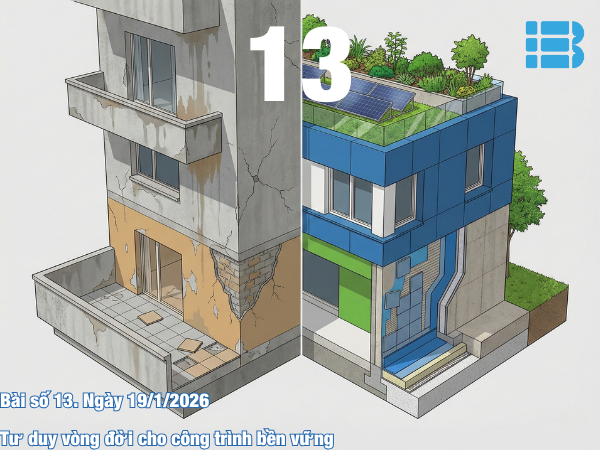
Regular performance tracking identifies early signs of deterioration, enabling timely intervention and preventing widespread damage.
5. Continuous improvement through evaluation
Sustainability is dynamic. Ongoing evaluation supports technical improvement and long-term performance enhancement.
6. Measurement and risk management
By converting potential risks into data, measurement strengthens technical and governance decision-making.
7. Sustainability measurement in Vietnam’s context
Limited lifecycle data often drives short-term decisions. Measurement is essential to shift toward long-term value thinking.
8. BUMATECH’s perspective
BUMATECH grounds sustainability in measurable outcomes durability, reduced repairs, and lifecycle efficiency of material solutions.
9. Conclusion
Without measurement, sustainability cannot be verified. Evaluation turns ESG principles into tangible building value.