Nhập địa chỉ email của bạn dưới đây và chúng tôi sẽ gửi cho bạn một mật khẩu mới.
1. What ESG means in construction
ESG evaluates Environmental, Social, and Governance factors. In construction, it spans design, materials, execution, operation, and maintenance.
2. E – Environment: more than green materials
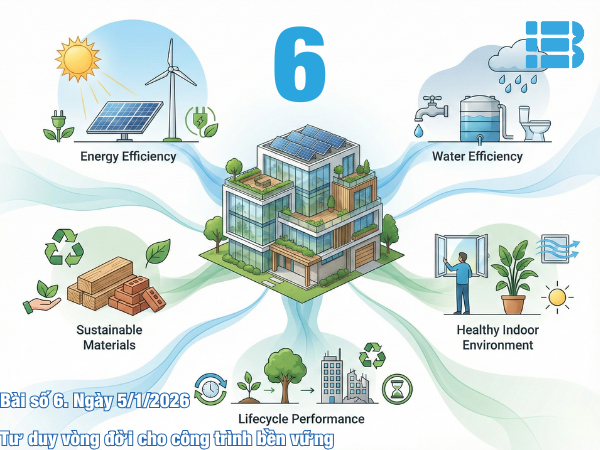
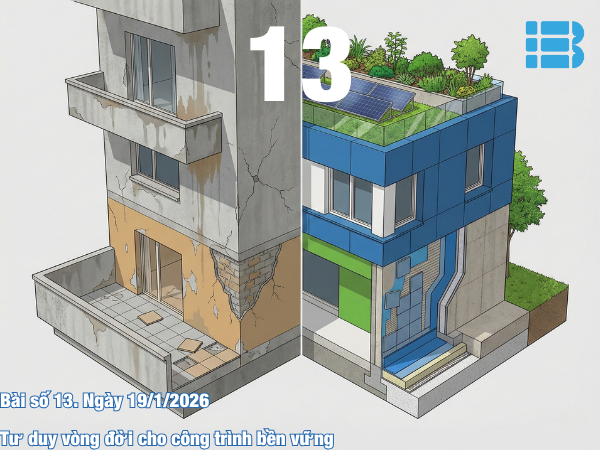
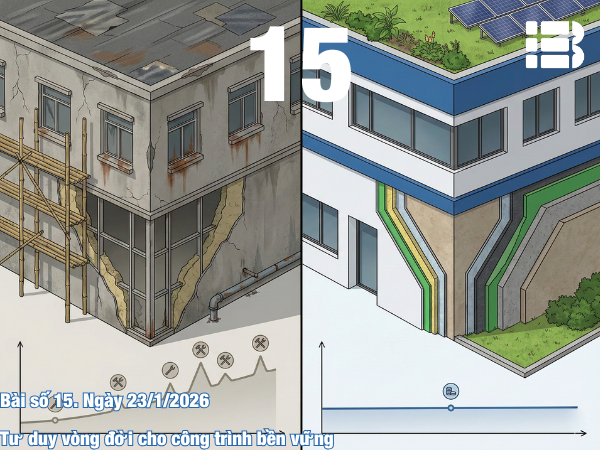
Environmental performance includes emissions, resource use, waste, and durability. Durable buildings reduce repairs and lower lifecycle emissions.
3. S – Social: safety, health, and quality of life
ESG addresses worker safety, indoor environmental quality, and community impact. Early deterioration increases social risks and costs.
4. G – Governance: the backbone of real sustainability
Governance shapes decision-making, risk control, and transparency. Without strong governance, ESG becomes superficial.
5. ESG and Life Cycle Cost (LCC)
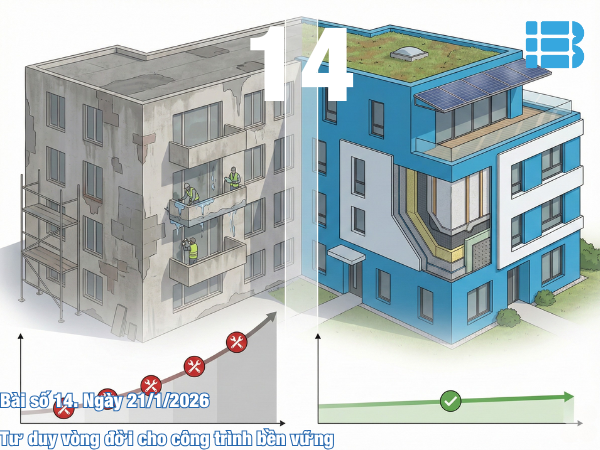
A practical ESG approach aligns with LCC thinking reasonable upfront investment to reduce long-term operational and repair costs.
6. Avoiding ESG greenwashing
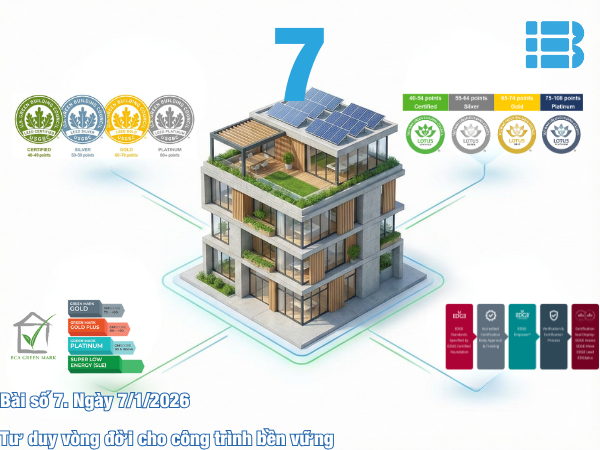
Chasing labels or marketing claims without technical substance undermines ESG credibility and market trust.
7. ESG in project delivery
ESG should be embedded in material selection, construction requirements, quality control, and O&M planning, not added at the end.
8. BUMATECH’s perspective
BUMATECH grounds ESG in engineering and lifecycle performance. Appropriate materials, correct application, and risk governance deliver tangible ESG value.
9. Conclusion
ESG in construction is not just about being “green.” Integrated E–S–G implementation delivers durable, economic, and social value over time.